Encuéntralo también en Pocket Cast, Breaker, GooglePodcast y Apple Podcast
Three kinds of people seem best able to grasp the value of friendship: philosophers, artists, and friends. Philosophers, from the depth of their thought, explore the essence of friendship, its weight, its causes, and its effects. Thus, for example, Aristotle observed that a friend is the most valuable of all external goods, since without friends no one can live (Nicomachean Ethics, VIII). From a very different perspective, artists also know how to capture the many aspects of intimacy and camaraderie that arise in an atmosphere of apparent naturalness, such as “those good moments that we spend without knowing” (Enanitos Verdes, Amigos).[1] Schiller’s Ode to Joy was composed to celebrate “whoever has succeeded in the great attempt, to be a friend’s friend.” Confronting the theoretical vision of philosophers and the emotional vision of artists stands the experiential perspective. Who can better say what friendship is than the friend? Perhaps he is not especially sharp-minded or able to express friendship in songs, paintings, or poems, but he will define it best with his embraces and laughter, with his sleeplessness and sacrifices, and even with his complaints. It is better to have a friend than to know what friendship is.
Among the millions of “friends” in the world, I have chosen one who lived an absolutely extraordinary life: Juan Larrea Holguín. Through his moving anecdotes, along with music and philosophy, I shall traverse the three stages of friendship: its birth, its cultivation, and eternity.
Opening Oneself to New Worlds
“Do you need anybody? I need somebody to love,” sang the Beatles (With a Little Help from My Friends). Everyone desires to love and to be loved. We were created to love, and our spirit remains restless until it satisfies this appetite. Friendship is neither an accessory nor a consumer article, much less a luxury product. No one can live without friends, said Aristotle, for they represent a crucial need of nature. He who has fewer friends is less human; the solitary man is either a god or a beast. Hence the joy of finding a friend. Whoever finds one, as the proverb says, discovers a treasure: he discovers a new world of surprises, a well filled with life projects, “a plan to make the dreams we dreamed the day before yesterday come true” (La Oreja de Van Gogh, Nadie como tú).[2] In a friend that plan is fulfilled to the letter: “Build my world of dreams around you, I’m so glad that I found you” (Jackson Five, I’ll Be There).
The first step in friendship is the encounter. In the streets multitudes are “just waiting on a friend” (Rolling Stones, Waiting on a Friend). Everyone wants to have Un millón de amigos (Roberto Carlos). Yet people sometimes have so few friends because they do not go out to meet others. They close themselves off, they abdicate living as persons—whether out of pride, simplicity, or faintheartedness. I do not refer here to the feeling of smallness one may experience before a friend; as C. S. Lewis notes, a friend is always greater than us in some sense. Rather, I refer to the faintheartedness that inhibits one from proposing a conversation to an important politician, a celebrity, or a wealthy businessman.
At other times, friendship is thwarted by airs of grandeur and pedantry. The person who looks down from the outset upon those who around serve him, upon persons of lesser prestige, culture, or social standing, or upon those younger in years, immediately erects an insurmountable barrier to friendship. Finally, there are the simple-minded, those who are simply not interested in the lives of others: they are already comfortable; they need nothing. Only for a condemned “hell is other people” (Sartre, No Exit, 1944).
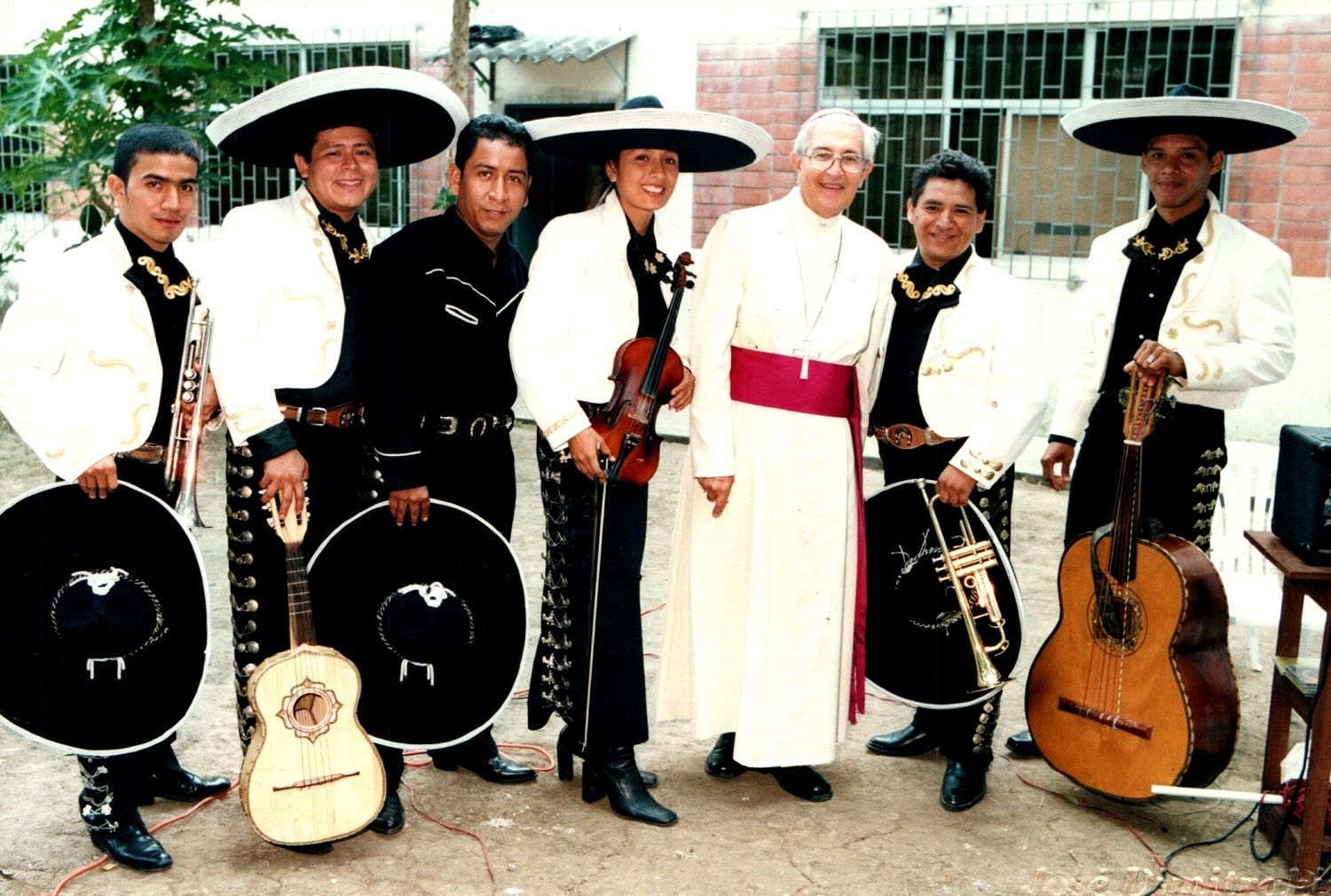
Juan had many friends because he sought them earnestly. Those who knew him best affirmed that he had two principal virtues: his immense concern for others and his extraordinary delicacy in dealing with them. Juan was everything: the best student in school, La Salle Prize winner, National Eugenio Espejo Prize recipient, Tobar Prize recipient (the most significant awards in Ecuador), author of more than one hundred books, distinguished lawyer, the country’s foremost jurist, several times doctor honoris causa. Midway through life he received holy orders and became bishop of important dioceses. Despite so many titles, he always knew how to treat poor and rich, learned and unlettered, young and old with the utmost simplicity, “in a festive atmosphere, with good humor, without any air of solemnity,” as he had learned from St. Josemaría. From childhood he knew how to befriend his parents’ friends, converse with those who happened to travel with him by ship or plane, take interest in the lives of his professional colleagues, enjoy himself with students, parishioners, and persons of every age and condition. He showed interest in all, known and unknown. Without prior introduction he wrote to many politicians, bishops, and businessmen to congratulate them on works carried out in service of society, thinking that “when someone does something wrong, everyone attacks him; but when good and even heroic works are done, no one says anything.” Convinced of this, he wrote to encourage and strengthen others in their decisions. Many valuable friendships were born of those letters.
He who distrusts does not approach and never finds a friend. Many plead “to have a little faith in me” (Joe Cocker, Have a Little Faith in Me). Juan trusted people, and people felt at ease by his side. They felt so comfortable that they frequently debated any and all legal matters with him, unafraid of his intellectual prestige. Many students and lawyers objected to his more conservative opinions in class or in national forums, even defending very liberal theses contrary to morality. None of this prevented them from becoming good friends. So highly did they esteem him that one day members of the party opposed to his convictions asked him to draft their own statutes. Juan knew how to harvest friendship even from the most hostile encounters.
Yet even this is saying little. Juan’s concern for his neighbor overflowed. One day, driving his small Volkswagen through the Ecuadorian highlands, he saw two indigenous men fighting furiously with stones in hand. Blood already ran down one man’s face. Juan stopped, got out, and hurried to separate the two. As he approached, he noticed the smell of alcohol. Despite their drunkenness, the men recognized the priest and said, “forgive us, Father, we are drunk.” With a bit of force, Juan ended a fight that might have ended in murder. On another day, along the same road, he saw a group of peasants gathered around something—or someone. Curious, he stopped and learned that a young indigenous woman had just given birth on the roadside while hurrying on foot to the village. The bishop took the mother and newborn to their humble home two or three kilometers away. Mother and son were always profoundly grateful for that. To find friends, one must often brake the car of life, step out for a moment, and take an interest in others.
In the face of such good examples, one might ask those who are timid, simple-minded, or proud—those who, out of fear, still do not open themselves to others—“why not be friends, stay united, live without fear and in freedom?” (Hombres G, Por qué no ser amigos).[3] Enough of placing barriers before ourselves!
I Will Be There for You
The encounter with a friend is the first step, but it is only a brief moment in time, a small seed capable of germinating or dying. For friendship to take root, time is necessary: time to share, time to help, time to argue, time to console. Without time there are only possibilities, potential friends, occasional companions.
The phrase most repeated in songs of friendship is “I’ll be there” (The Rembrandts, Divas, Jackson Five, Bon Jovi, among many others.). Often the call is specified, “I’ll be there for you.” Being there, spending time is essential to friendship. Aristotle noted that “it is natural for friends to live together” (Nicomachean Ethics, IX). Thus it sounds natural to hear: “I will be listening even if I cannot see you” (Alex Ubago, Aunque no te pueda ver).[4] “You will no longer be alone, I will be there” (Laura Pausini, Las cosas que vives).[5] “I know it is difficult, but I will be here” (Belanova, Toma mi mano).[6]
He who looks only to his own affairs has no friends. “They are my friends; in the street we spent the hours; they are my friends above all things,” sings Amaral (Marta, Sebas, Guille y los demás).[7] Indeed, whoever desires to have friends must see them as an end in itself, setting other things aside: they must leave work early, sleep somewhat less at night, devote part of the weekend to them, and forego other activities in order to join the group and share a few laughs.
Without neglecting his studies, from youth Juan learned to spend hours, afternoons, and weekends with companions; to visit them, write to them, and remain attentive to their major and minor events. His social life became especially intense in Rome, where he perused his law degree at the renowned University of La Sapienza. There he had the good fortune to meet St. Josemaría, who changed his life. He grew close to him, took walks through the Eternal City with him, and learned to deepen friendship by seeking what unites and avoiding what divides. As Juan loved mountain climbing, throughout his life he invited many friends to climb with him. Each climb an occasion for hours of conversation about human and divine matters, and the conversation ascended to heaven. On one occasion he was distracted: while climbing he felt pain in the sides of both feet, which increased at each step. At the summit he discovered the cause: he had put his shoes on the wrong feet! He was so absorbed in conversation that this “trifle” had escaped him…
At Christmas he spared no time in showing attentiveness to friends. For years he wrote more than two hundred greeting cards by hand. He also sought to call others on their birthdays and devote time to everyone in gatherings. Once he was decorated at the Pontifical Catholic University of Ecuador for his contribution to the science of law. At the celebration that followed, it was striking to see him not only among the great luminaries of the moment but also with students who approached him—indeed, with anyone who wished to speak with him. True friendship does not measure strength. “Some other folks might be a little bit smarter than I am, bigger and stronger too, maybe, but none of them will ever love you the way I do … Yeah, you’ve got a friend in me” (Toy Story, You’ve Got a Friend in Me).
Friendship manifests itself “when a man rejoices with the joyful and when he sorrows with the sorrowful,”[8] wrote Thomas Aquinas. The reason is simple: “When a man sees others saddened by his own sorrow, it seems as though others were bearing the burden with him, striving, as it were, to lessen its weight; wherefore the load of sorrow becomes lighter for him.”[9] In this sense Juan sought to attend the funerals of his friends’ relatives, knowing what it meant to them, and he never understood the man who resolved never to attend such events. Perhaps few words were exchanged, but what mattered was being there. On such occasions, as Roberto Carlos says, “I need not even say all this that I tell you, but it is good thus to feel that I have a great friend” (Amigo).[10] Moreover, as a priest he attended persons of every class, fame, and social position on their deathbeds, even those who had been his “political enemies”—in his heart he had none—achieving true last-minute conversions.
The Nectar of Friendship
The most primordial core, the quintessence of friendship, its purest extract, is to seek the good of the friend. Hence drinking companions are not truly friends in any meaningful sense. A true friend pushes us forward, launches us toward the summit, moves us to give our best. One “gets by” with “a little help from my friends” (The Beatles, With a Little Help from My Friends); one rises (“get high”), dares to try (“I’m gonna try”), in their company. Friendship consists in moral growth. Following the Greek philosophers, Leonardo Polo maintained that just and virtuous men are most capable of friendship because they desire the true good—first and foremost the good of the human person—and, more than others, are capable of giving it. Thus, one understands why it is so common to equate good men with friendly men, and why it was so easy for Juan to win friends: he possessed a prodigious intellect, an irreproachable conduct; he devoted himself entirely to others. If “a friend is a light shining in the darkness” (Enanitos Verdes, Amigos),[11] he was that light. How many persons did he counsel to improve their lives? How many did he encourage to give their best, to undertake ambitious professional projects, to be generous with God and with their country? Consider the dozens of books his friends wrote with him, the priestly care he provided to thousands of persons, all those deeply encouraging personal confidences. To all he said with his gestures, “take my hand” (Belanova, Toma mi mano),[12] “count on me even when you cannot count,” “we are friends, knock at my door” (Juan Luis Guerra, Amigos).[13] At the same time, those who approached him could reply: “you have that gift of giving tranquility, of knowing how to listen, of enveloping me in peace” (La Oreja de Van Gogh, Nadie como tú),[14] or simply, “you make me live… I’m happy, happy at home. You’re my best friend” (Queen, You’re My Best Friend).
Juan sought more than heavenly goods for his friends. In reality, he desired that all should be well in every imaginable sense. His affection encompassed the smallest details. Out of modesty, Juan did not usually speak of his achievements, his titles, or anything that might show vainglory. Yet when he was appointed Military Bishop and realized that mountaineering greatly interested members of the armed forces, he spent long periods with them recounting how he had climbed the highest Ecuadorian peaks, simply to make one afternoon after another more pleasant for others. His friendship knew no rigidity; it was never stiff or formalistic.
Another anecdote: a few hours before his death, the man assisting Juan with oxygen was extremely tense, for the patient was breathing poorly. The man recalls that Juan took a small metal container that was on the bed and placed it on his head like a helmet, saying, “I am a little soldier of Christ.” Both laughed, and the one accompanying him at his deathbed enjoyed a moment of peace.
But friendship is more than almsgiving to the poor. The essential element of friendship is reciprocal love (Socrates, Plato, Aristotle). Unlike mere benevolence, it implies a giving and receiving of goods, a giving and allowing oneself to receive. “I’ll be there for you… ’cause you’re there for me too” (The Rembrandts, I’ll Be There for You). “It is characteristic of the liberal person not to seek to receive, but also not to refuse gifts in an unfriendly spirit” (Nicomachean Ethics, IX). Nor did Juan suffer from the rigid stance of the “perfect” man who accepts no favors. He gratefully acknowledged gifts even if he often did not use them; if decorations and praise were offered, he did not refuse them, although he once admitted that such honors cost him. On one occasion, already a bishop, he attended a gathering of persons of high social standing and, at the suggestion of a friend, accepted a strong liquor. Paquito offered him a grappa, which Juan accepted and even repeated once. He noted that although he had lived many years in Italy and Argentina, he had never tasted that typical drink, which made Paco doubly happy for having been able to give his guest that pleasure.
C. S. Lewis observes that artists depict lovers “face to face,” whereas they portray friends “side by side.” That is the proper characteristic of friendship: sharing tastes, projects, aspirations, even annoyances. Only he is a friend who seeks what unites, the things held in common. A friend may say, “in the things you live, I too shall live” (Laura Pausini, Las cosas que vives).[15] In the intellectual world, a highly appreciated gesture is to read what one’s friends write. Juan read with great interest the books his acquaintances published and sent them his comments in writing. Hundreds of these letters are preserved today. A heroic gesture was his conduct toward his friend José Rumazo: Juan read the seven volumes Rumazo wrote on “The Parousia,” each of about eight hundred pages. After writing detailed comments, he promoted and secured publication of all seven volumes. Even many years later, he encouraged others to revive that project, which was falling into oblivion. Writers keenly perceived his affection. It is therefore unsurprising that of the 1,264 books in his library at his death, more than one fifth bore heartfelt dedications from their authors—all addressed to “Juanito.”
“We share memories,” sing Brightman and Carreras in Friends for Life, and Celine Dion titles one of her songs Je ne vous oublie pas (I will not forget you; Gloria Estefan has a similar song). Dion adds: “Je ne vous oublie pas, non, jamais, Vous êtes au creux de moi” (I will never forget you; you are deep within me). Friends do not forget. “Of so many things that I lost, I would say I keep only what was that magical time born in April” (Alex Ubago, Aunque no te pueda ver).[16] Indeed, something very characteristic of those who cherish one another is to feel that “you are always on my mind” (Elvis Presley, Always on My Mind). Many were surprised to see that Juan still remembered small anecdotes that had occurred in the office, on the street, or in the classroom, even decades after the event. At one certain gathering he approached a congressman who had once been his student and who, forty years earlier, had defended divorce in class. That person, who had not changed his opinion, stood there with the only woman of his life. “You see, Enrique, how marriage was forever!” Both smiled.
Friendship is a magic wand that transforms what is boring, foolish, and meaningless into the most sensational moment of existence. Friends invite one to “live life from emotion to emotion” (Timbiriche, Somos amigos).[17] The poverty of youth, the inconveniences of the neighborhood, a disastrous outing in which everything goes wrong become the most amusing anecdotes that friends will remember while laughing uncontrollably. Even disputes become occasions for union and growth. “It is a bad sign if friendship is unable to endure diverse opinions, or if the dissenter (hostis) becomes an inimicus. The contrast of opinions is not enmity, but an occasion for correction, for practical rectification” (Polo).[18] A true friend softens adversities and knows how to introduce a touch of humor into any discussion. Juan once commented that one night he had to endure the noisy electoral campaigns of a famous politician of the Liberal Radical Party, Dr. Raúl Clemente Huerta, in Ibarra. Unable to sleep, he had to change rooms. When he saw the candidate some days later, he jokingly told him that his campaign had driven him from his room “and he, taking up the joke, would lightly strike his chest [in penance] when [ever] we met. In time, my friend became gravely ill in Guayaquil; I visited him several times bringing Christian consolation, and he finally received the sacraments and died exemplarily,” Juan wrote.
A Friend for Eternity
At the end of his life, Juan wrote that he had learned from St. Josemaría “love for freedom, respect for the opinions of others and, consequently, the need to understand persons as they are, to treat them all with respect, and to seek their friendship, convinced that it is a most precious treasure. Through friendship, much good can be done to others, and we also receive magnificent examples from all kinds of people.”[19] It is evident that he learned the lesson well, for when he died on August 27, 2006, a great many people wept for him while the army band played the funeral march. “I won’t cry, I won’t cry; no, I won’t shed a tear, just as long as you stand, stand by me” (Ben E. King, Stand by Me). Juan had departed. He was no longer there. There were abundant reasons to weep.
But love cannot die. Love demands eternity; it does not tolerate the end of time. “Amigos para siempre, means you’ll always be my friend. Amics per sempre, means a love that cannot end. Friends for life, not just a summer or a spring” (Sarah Brightman and José Carreras, Friends for Life). In eternity true friends await us with open arms. From eternity they can help us even more.
Juan Carlos Riofrío Martínez-Villalba
Quito, 6 de diciembre de 2014
[1] “Esos buenos momentos que pasamos sin saber” (translation is mine). I am grateful with Steve Phillips for proofreading this article.
[2] “Un plan para que se hagan realidad los sueños que soñábamos antes de ayer” (translation is mine).
[3] “¿Por qué no ser amigos, estar unidos, vivir sin miedo y en libertad?” (translation is mine).
[4] “Te estaré escuchando aunque no te pueda ver” (translation is mine).
[5] “No estarás ya solo, yo estaré” (translation is mine).
[6] “Sé que es difícil, pero yo estaré aquí” (translation is mine).
[7] “Son mis amigos, en la calle pasábamos las horas; son mis amigos por encima de todas las cosas” (translation is mine).
[8] Summa Theologiae I–II, q. 38, a. 3, ad 1.
[9] Summa Theologiae I–II, q. 38, a. 3, sol.
[10] “No preciso ni decir todo esto que te digo, pero es bueno así sentir que yo tengo un gran amigo” (translation is mine).
[11] “Un amigo es una luz brillando en la oscuridad” (translation is mine).
[12] “Toma mi mano” (translation is mine).
[13] “Cuenta conmigo cuando ni contar pudieras,” “somos amigos tócame a la puerta” (translation is mine).
[14] “Tienes ese don de dar tranquilidad, de saber escuchar, de envolverme en paz” (translation is mine).
[15] “En las cosas que vives, yo también viviré” (translation is mine).
[16] “De tantas cosas que perdí, diría que sólo guardo lo que fue mágico tiempo que nació en abril” (translation is mine).
[17] “Vivir la vida de emoción en emoción” (translation is mine).
[18] Translation is mine.
[19] Translation is mine.
 Juegos de pluma. Blog de Juan Carlos Riofrío
Un comentario en “The Music, the Philosophers, and Friendship”